Let’s Look At The Different Phases Of The Workshops
MindLines™ is a progressive journey designed to build skills, consistency, and lasting cognitive change. We offer three clear phases of engagement, each serving a distinct purpose in your transformation.
I. Choose Your Phase: The MindLines™ Workshop Tiers
Here is a breakdown of our commitment levels, from foundational discovery to sustained mastery:
Introductory Workshop (The Foundation)
The MindLines™ Introductory Workshop is an intensive, 2.5-hour session designed to provide an immediate, practical foundation in Creative Wellness. Participants are supplied with all necessary materials and receive a complete overview of the exercises and the underlying neuroscience simultaneously. This hands-on experience, guided by downloadable notes for before and after the session, allows students to immediately apply techniques for emotional centering. The workshop is explicitly structured as the foundational prerequisite, providing a practical taste and a clear introduction to the Mid-Tier/Advanced MindLines™ course.
Starter Tier Workshop (The Habit Builder)
The MindLines™ Starter Tier Workshop is an intensive, five-week commitment designed to establish the core skills of Creative Wellness through consistent practice and powerful group accountability. Participants commit to a weekly one-hour live session to learn foundational techniques and neuroscience, which is then reinforced by a daily specified drawing or journaling exercise (homework). This daily practice is shared with a supportive peer tribe via WhatsApp, ensuring continuous feedback and motivation. This consistent effort is essential for building the neural pathways required for genuine emotional mastery, serving as the necessary foundation and bridge to the Mid-Tier/Advanced MindLines™ course for expansive transformation.
Mid-Tier Workshop (The Mastery Phase)
The MindLines™ Mid-Tier Workshop represents the vital next step in cognitive mastery, requiring a dedicated five-week commitment to deeper application and expansion of the foundational brain exercises. Building upon the Starter Tier’s habits, this program focuses on mastering advanced techniques and concepts, moving beyond basic centering to proactively reshape ingrained patterns and blocks. Through consistent, targeted practice of these neurological exercises, participants solidify the ability to generate profound clarity, accelerate decision-making, and fully integrate Creative Wellness into their life’s purpose, ensuring long-term, sustainable transformation.
II. Our Methodology: The Science Behind the Line
Regardless of the Tier you choose, the MindLines™ methodology is built on two core pillars: Nervous System Regulation and the Cementing of Cognitive Change.
Pillar 1: Foundational Nervous System Regulation
We begin by demystifying your body’s control center. We thoroughly explain the Autonomic Nervous System (ANS), detailing the difference between the Sympathetic (stress/action) and Parasympathetic (calm/rest) states. Understanding this internal “accelerator” and “brake” is the essential first step toward intentional mental state change.
Pillar 2: Deconstructing the Five Core Methods
Before any exercise, we break down the neurological impact of each MindLines™ method:
1. Neurographica: Calming the Electrical Storm
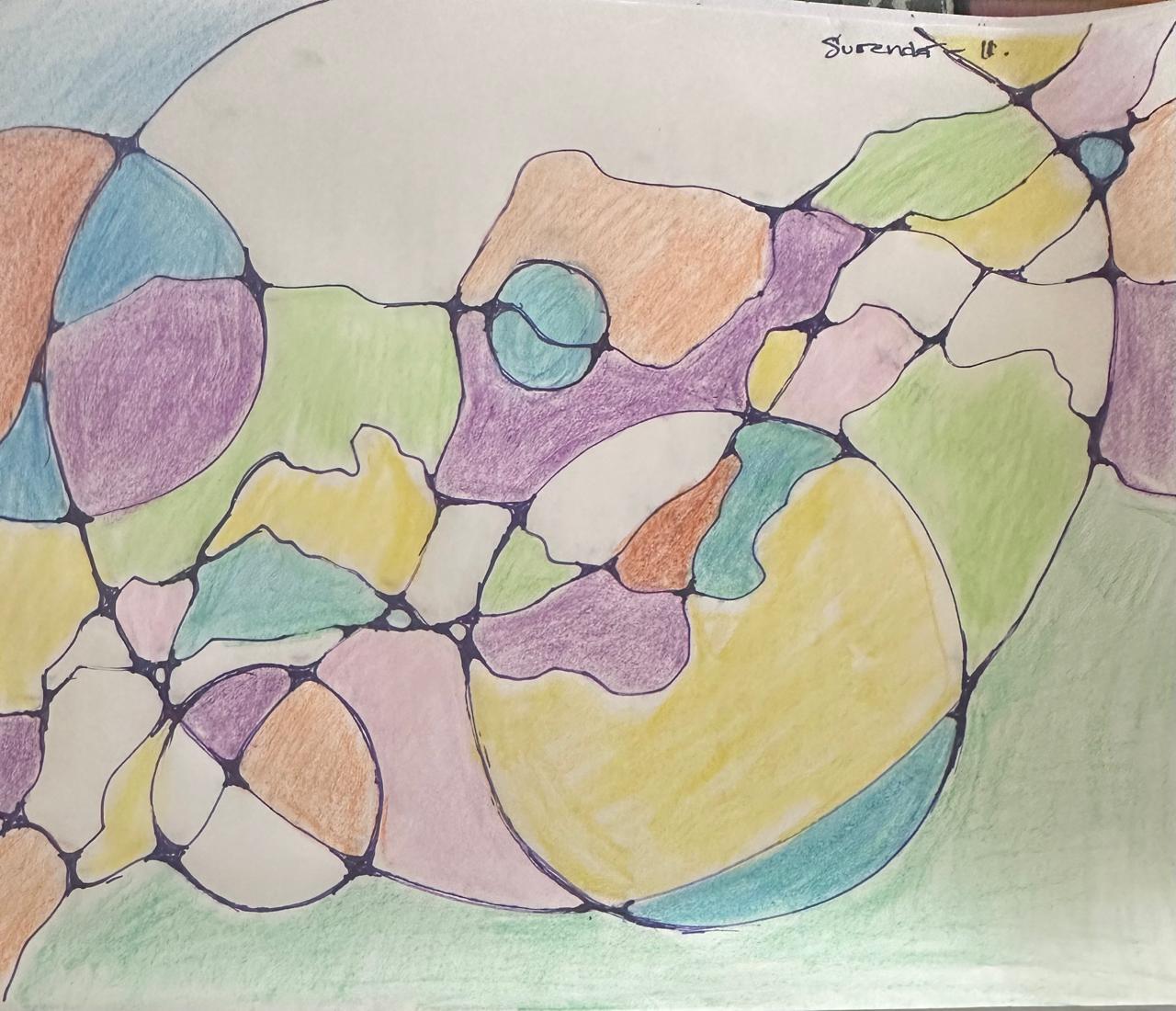
Drawing the free-flowing, curved lines and rounding the sharp intersections physically mirrors a process of soothing neural pathways. This action sends a powerful signal of safety to the brain, which helps to resolve internal conflict and immediately dials down the Sympathetic Nervous System (stress response). The focused application of colour further promotes a state of “flow,” activating pleasure centers and contributing to emotional regulation (Neuroaesthetics).
2. Journaling – The Neural Integrator
Journaling forces the brain to translate the non-verbal, felt experience of the drawing into language. This process of externalization moves thoughts and emotions from the volatile limbic system into the prefrontal cortex, allowing for rational processing and reduced emotional intensity. It also serves as a powerful tool to confirm and anchor the positive state change achieved through the creative exercises.
3. Non-Dominant Hand Drawing: Releasing Self-Judgment
Using your non-dominant hand forces your brain out of habitual pathways, bypassing the highly critical, analytical centers. This intentional awkwardness is key to disrupting the inner critic. By allowing yourself to create something “messy,” you consciously give your brain permission to stop the judgment of right and wrong, translating into reduced perfectionism and mental rigidity.
4. Upside-Down Drawing: Challenging Perception
Drawing an image upside-down forces your brain to focus purely on lines, shapes, and spatial relationships, bypassing pre-programmed assumptions. This practice of seeing things differently primes your brain for a more resourceful, flexible state, encouraging creative solutions where problems once seemed fixed.
5. Mind Mapping: From Confusion to Clarity
The radial, associative structure of Mind Maps mirrors your natural neural networks, engaging both the logical and creative hemispheres. This method is the ultimate organizational tool, shifting the mental state from confusion and overwhelm to clarity and focused action, consolidating insights into a coherent, manageable plan.

III. Habit Formation: Cementing Cognitive Change
The MindLines™ structure is specifically designed to create lasting change. We introduce the powerful neuroscience behind habit formation, emphasizing that consistency drives physical changes in the brain (Neuroplasticity).
- The Power of Practice: We explain that practicing a new cognitive task daily carves out permanent, efficient neural pathways. This sustained practice (especially during the two-week integration periods in advanced tiers) moves the creative technique from a conscious, effortful skill into an automatic, unconscious mental resource used to self-regulate stress.
- The Integration: All MindLines™ methods share a common neurological goal—to move participants from stress to safety, from confusion to clarity, and from reactivity to reflection. Creativity is not an indulgence; it is the language of a healthy, integrated brain, giving participants the tools to self-regulate, reframe, and reconnect.
