Yesterday, standing on the edge of the shoreline, I experienced a collision between my oldest dreams and my deepest primal fears. It happened at our local beach. The ocean was that particular shade of steel-grey that warns you it’s going to be freezing. Normally, I’m the type to dip a toe in, shiver, and retreat to the warm sand.
But then I saw them.
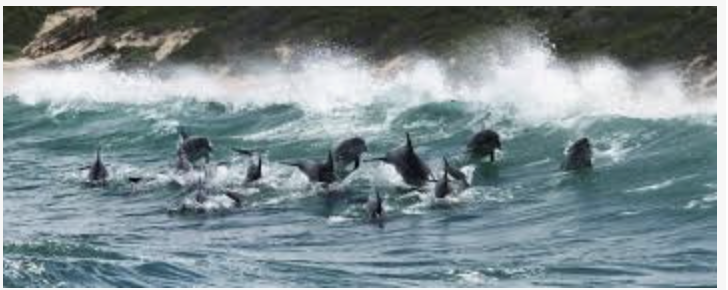
In the distance, past the backline, fins were breaking the surface. Dolphins. Frolicking, free, and wildly inviting. It has always been a bucket-list dream of mine to swim with them in the wild. In that moment, a switch flipped in my brain.
Without a second thought, I dove in. I embraced the icy shock of the water with a glee and enthusiasm I didn’t know I possessed. The cold didn’t matter. The distance didn’t matter. My lack of recent swim training didn’t matter. My mind was locked onto one singular, compelling vision: get to the dolphins.
At MindLines, we often talk about how our brains are designed to keep us safe in our comfort zones, throwing up resistance the moment we try to stretch. Yet, here I was, bypassing years of ingrained hesitation. Why? Because the desire for the “reward” was stronger than the noise of the resistance. I was running on pure, dopamine-fuelled focus. I swam further and faster than I have in years, propelled by a vision of joy.
And then, reality arrived with a crash.
Just as I reached the area where they had been playing, they vanished. With a few flickers of their powerful tails, they were gone into the deep. The dream dissolved.
I stopped treading water and turned around. My heart thumped against my ribs, and it wasn’t just from exertion. I saw the shore. It was tiny. I was impossibly far out. The water suddenly felt colder, heavier, and infinitely deeper beneath me.
The panic was instantaneous. It was a visceral, chemical dump into my system. My breath caught in my throat. The internal monologue shifted violently from “Look at me go!” to a deafening alarm bell: You are freezing. You are exhausted. You are not fit enough to get back. You are in danger.
This is what we call the “Amygdala Hijack.” My brain’s threat-detection centre seized control, drowning out rational thought and flooding my body with stress hormones. I was paralysed in the vastness of the ocean. The narrative my mind was spinning was one of inevitable failure.
I knew that if I indulged those thoughts—if I let the panic loop play out—I would tense up, my breathing would become erratic, and I would likely drown.
I had to make a choice. In that freezing water, I had to apply the very core of what we teach at MindLines. I had to interrupt the pattern.
I forced my gaze away from the expanse of water and locked it onto a single lifeguard tower on the distant beach. I narrowed my entire world down to that one yellow dot.
I told myself: Don’t think about the cold. Don’t think about your tired arms. Just pull. Breathe. Pull. Breathe.
Every time a thought of fear tried to intrude—a tendril of “what if I can’t make it”—I mentally slammed a door on it. I refused to give the neural pathways of panic any oxygen. I replaced the complex narrative of disaster with a simple, rhythmic action.
Stroke by stroke, I got closer. The yellow dot got bigger. And eventually, my feet touched the sand. I staggered onto the shore, shivering uncontrollably, but alive.
As I sat wrapped in a towel, warming up, the profound duality of the experience hit me.
I had just performed two incredible feats of swimming that I wouldn’t normally be capable of. The swim out was fuelled by desire, joy, and a compelling dream. The swim back was fuelled by necessity and survival.
Two completely opposing emotional states—elation and terror—had produced the exact same physical result: hyper-focus and action.
This is the magic of the human mind. Once we are truly focused, our brains stop arguing with us and start “getting us there.” The brain doesn’t judge why you need the intense focus; it just provides the mechanism.
But here is the vital lesson: When I swam out, I was unconsciously reacting to an external reward (the dolphins). When the reward vanished, I crashed.
When I swam back, I had to consciously generate that focus internally to save myself. I had to wrest control of the steering wheel from my panic response.
At MindLines, we believe you shouldn’t wait for a life-or-death situation to learn how to direct your mind. We spend most of our lives in that middle ground—not chasing a dream, and not drowning, just paddling around in low-level stress and limiting beliefs.
We have the power to interrupt those unhelpful patterns, move from stress to calm, and direct our neural energy toward the results we want. We don’t need dolphins or danger to activate our potential. We just need to understand the machinery of our own minds. You can choose your focus, and your brain will magically help you get there.